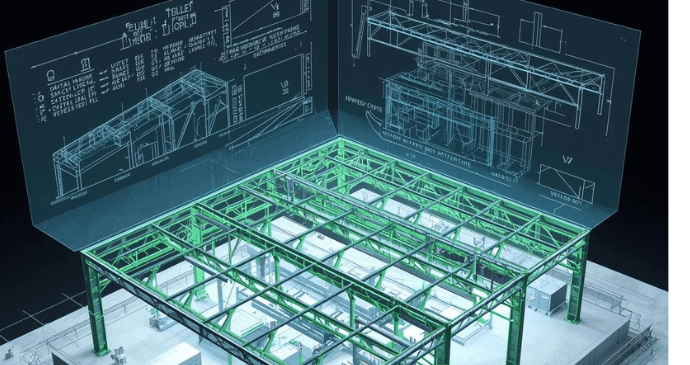
Why Fabrication Rework Is Still a Silent Profit Killer
Rework is one of the biggest hidden expenses in steel fabrication, mechanical fabrication, and construction projects. Industry studies show that 5–12% of total project cost is lost due to errors discovered during fabrication or onsite installation.
Common causes include:
- Poor coordination between trades
- Inaccurate or outdated drawings
- Late design changes
- Missing dimensions, tags, or weld information
- Fabrication details not aligned with actual site conditions
This is where BIM and high-quality shop drawings become a game-changer.
Today, leading fabricators across the USA rely on BIM-enabled workflows to predict clashes, engineer accurate assemblies, eliminate guesswork, and significantly reduce fabrication rework long before materials reach the workshop floor.
What Causes Fabrication Rework in Construction Projects?
Before understanding how BIM reduces rework, it’s important to identify the root causes inside fabrication shops.
Design and Fabrication Information Gaps
Architectural and structural design documents are rarely developed with fabrication accuracy in mind. They often exclude critical shop-level information such as:
- Weld symbols
- Bolt sizes and grades
- Exact cut lengths
- Plate thickness
- Connection details
Without fabrication-ready data, shop teams are forced to make assumptions—and assumptions lead directly to rework.
Lack of Multi-Trade Coordination
When structural, architectural, and MEP systems are not coordinated in a shared model, issues such as the following arise:
- Steel members clashing with MEP services
- Embed plates conflicting with reinforcement
- Stair and handrail misalignments
- Equipment clearance violations
These conflicts are typically discovered late during erection, increasing rework costs.
Poor Revision Control and Communication
Fabrication errors are inevitable when the shop is working from outdated drawings while site teams operate on newer revisions. Uncontrolled revisions and manual document handling remain major contributors to fabrication rework.
Mismatch Between Design Model and Site Conditions
Site conditions often vary from original design assumptions. Without accurate field verification or point cloud data, shop drawings may not reflect real-world conditions, resulting in misalignment during fabrication and installation.
How BIM Helps Reduce Fabrication Rework
BIM is more than a 3D model—it is a coordinated process that integrates design, detailing, and fabrication into one reliable workflow.
Early Clash Detection Prevents Costly Site Issues
Using platforms such as Tekla Structures, SDS2, and Revit, detailers can detect clashes including:
- Steel-to-steel conflicts
- Steel-to-MEP interference
- HVAC and structural clearance issues
- Piping slopes intersecting beams
Resolving these issues before issuing shop drawings results in:
Fabrication-Level BIM Modeling Improves Accuracy
A fabrication-ready BIM model includes:
- Accurate member sizes
- Plate geometry and profiles
- Chamfers, copes, and bevels
- Cutting paths and assemblies
- Welding preparation
- Bolt schedules and CNC-ready data
This ensures fabricators work with production-grade information, not conceptual intent.
Automated Shop Drawings Minimize Human Error
Once the BIM model is approved, the system generates:
- General arrangement drawings
- Assembly drawings
- Erection drawings
- Part drawings
Automation ensures consistent dimensions, correct part numbering, and accurate weld callouts—significantly reducing shop-floor errors.
Accurate BOMs and CNC Data Accelerate Fabrication
BIM enables direct extraction of:
- Bills of Materials (BOMs)
- Cut lists and nesting data
- CNC and DXF files
- Robotic welding information
This eliminates manual interpretation and ensures fabrication machinery receives precise, standardized inputs.
Centralized Revision Control Eliminates Confusion
BIM workflows record every change and provide cloud-based access to the latest models. Platforms such as Trimble Connect and Tekla Model Sharing ensure version control and traceability, drastically reducing errors caused by outdated drawings.
Scan-to-BIM Ensures Accurate Fit in Renovation Projects
Point cloud scanning captures actual site conditions in high detail. When combined with BIM, it prevents:
- Beam misalignment
- Incorrect anchor locations
- Pipe routing conflicts
- Elevation and offset errors
This is especially valuable for brownfield, retrofit, and industrial projects.
Real-World Results of BIM-Driven Shop Drawings
A mid-size US steel fabricator reduced shop rework by over 70% after adopting Tekla-based BIM workflows. Benefits included faster fabrication cycles, accurate bolt alignment, zero site delays, and improved contractor confidence.
Best Practices to Reduce Fabrication Rework Using BIM
Start With a Coordinated Structural BIM Model
Use accurate grids, levels, and framing by leveraging structural BIM modeling services aligned with AISC-compliant modeling standards.
Run Multi-Discipline Clash Detection Early
Coordinate with architectural, MEP, fire, and equipment models using Navisworks or Tekla.
Issue Fabrication-Ready Shop Drawings
Ensure all drawings include complete dimensions, weld symbols, bolt schedules, material specifications, and erection sequences by using professional structural CAD drafting and shop drawing services.
Verify BOM and CNC Outputs Before Fabrication
Cross-check cut lists, nesting files, and DXF outputs to avoid costly material waste.
Adopt Centralized Document Management Systems
Use Trimble Connect, Autodesk BIM 360, or Tekla Model Sharing for revision control.
Quality Checklist for BIM-Based Shop Drawings
A structured BIM quality check can eliminate over 70% of fabrication rework before production begins.
Why Fabricators Trust BIM-Based Shop Drawing Experts
Fabricators working with MechCiv Engineering Consultants LLC and leveraging their construction documentation and fabrication support services benefit from accurate, coordinated workflows with full revision control throughout the project lifecycle.
- Dedicated BIM modelers
- Tekla and SDS2 detailing experts
- Fabrication-ready, error-free drawings
- Fast turnaround times
- CNC-ready deliverables
- Experience across commercial and industrial projects
Frequently Asked Questions About BIM and Fabrication Rework
Is BIM suitable for small fabrication shops?
Yes. Modern cloud-based BIM solutions are cost-effective even for small teams.
Can BIM completely eliminate fabrication rework?
While no system removes rework entirely, BIM typically reduces it by 60–90%.
Does BIM improve installation accuracy?
Yes. BIM enhances erection sequencing, bolt coordination, and on-site fit-up.
BIM and Shop Drawings as the Foundation of Rework-Free Fabrication
Fabricators who adopt BIM-driven workflows deliver projects faster, with fewer errors and higher profit margins. Fabrication-level accuracy, clash-free coordination, and CNC-ready data provide a decisive competitive advantage in today’s construction industry.
Work With MechCiv Engineering Consultants LLC
We provide:
👉 Get accurate BIM modeling and shop drawings that reduce fabrication rework.
Contact MechCiv Engineering Consultants LLC today.